

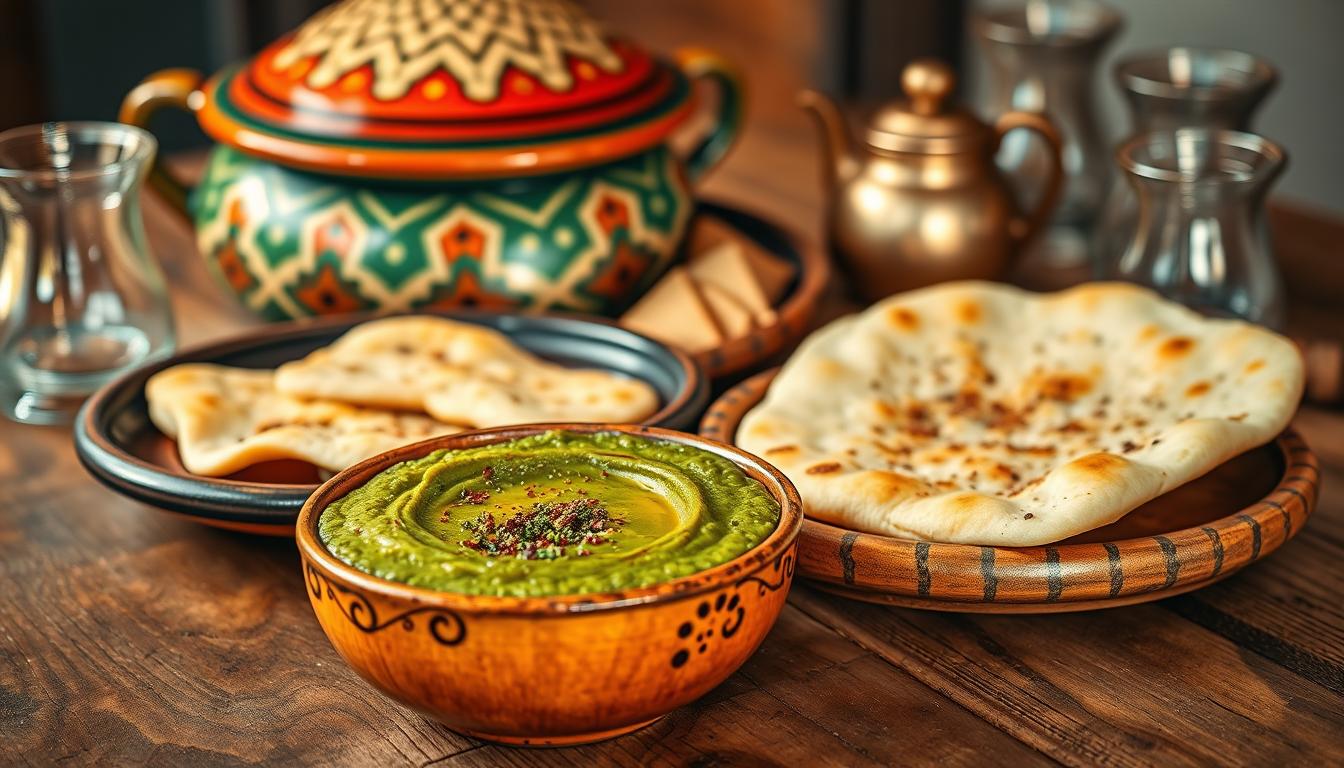
Ever wondered why Moroccan Bissara is so loved? It’s not just a soup; it’s a way to connect with others. Bissara is a key part of Moroccan food, loved for its health benefits and simplicity.
Exploring Moroccan Bissara, you’ll find out what makes it special. It’s the fava beans and spices that give it its unique taste. You can make this delicious soup at home, bringing a bit of Morocco to your table.
Table of Contents
What is Moroccan Bissara?
As you explore Moroccan cuisine, you might find Bissara. It’s a traditional vegetarian Moroccan dish made with fava bean soup. People enjoy it when it’s cold outside.
Bissara started in Northern Morocco. It was loved by workers and farmers for its nutrition and warmth. Soon, it became popular all over Morocco, with each area adding its twist.
A Brief History of Bissara
Bissara’s history in Morocco goes back to its farming days. It was made with dried fava beans. These were soaked and cooked in water to make a nutritious soup.
Cultural Significance in Morocco
In Morocco, Bissara is more than food. It’s a sign of welcome and kindness. It’s served at gatherings and celebrations, shared with loved ones. Enjoying a bowl of fava bean soup is like experiencing Moroccan cuisine itself.
Key Ingredients for Bissara
To make a true North African dish like Bissara, you need top-notch ingredients. Bissara is a favorite in Morocco, often enjoyed as a starter. The main parts are dried fava beans, garlic, spices, olive oil, and fresh herbs.
When you’re buying these items, keep in mind the amounts and their roles in the recipe:
- 1 cup dried fava beans: The base of the Bissara soup
- 3 cloves garlic: Adds flavor and aroma
- 1 teaspoon ras el hanout: A mix of spices, like cinnamon, cumin, and ginger
- 2 tablespoons olive oil: Boosts flavor and texture
- Chopped fresh herbs: Adds freshness and color to the dish
Exploring Moroccan cuisine, you’ll see Bissara is a favorite, often eaten for breakfast. These ingredients come together to make a tasty and genuine North African recipe. It’s loved by both locals and visitors.
Health Benefits of Bissara
Exploring Moroccan cuisine, you’ll find Bissara is more than tasty. It’s a healthy legume soup packed with nutrients. Made from fava beans, it’s a great source of protein, fiber, and vitamins and minerals. This makes it perfect for a healthy diet.
Bissara is special in Moroccan cuisine for its simplicity and health benefits. It’s often topped with olive oil, adding healthy fats. As a healthy legume soup, it’s great for a nutritious, filling meal.
Nutritional Value of Fava Beans
Fava beans are full of protein, fiber, and vitamins and minerals. They’re also low in calories and rich in antioxidants. These can help lower the risk of chronic diseases.
Benefits of Olive Oil
Olive oil is a key part of Bissara, bringing many health benefits. It’s full of healthy fats that can lower cholesterol and heart disease risk. Plus, it’s packed with antioxidants that protect cells and reduce inflammation.
Essential Cooking Tools
To make an authentic Moroccan soup like Bissara, you need the right tools. Moroccan food is famous for its deep flavors and hearty dishes. The right equipment makes a big difference in your fava bean soup’s quality.
A large pot with a heavy bottom is key for cooking Bissara. This pot ensures even heat, preventing the beans from burning. Dutch ovens or clay pots are also great for slow-cooking the fava beans.
You’ll also need a blender or food processor to puree the beans. This step is important for the soup’s consistency. A wooden spoon and a slotted spoon are also essential. They help stir and serve the soup easily.
By using these tools, you’re on your way to making a delicious Bissara. It’s a traditional Moroccan soup that’s a staple in their cuisine.
Step-by-Step Bissara Preparation
To make authentic Moroccan Bissara, follow a few easy steps. This traditional soup is made with fava beans, packed with protein and fiber. It’s a beloved dish in Morocco, known for its rich flavors.
Soaking the Fava Beans
The first step is to soak the fava beans overnight. This makes them cook faster and easier to digest. Soak them in water or broth, then drain and rinse before cooking.
Cooking the Beans
After soaking, cook the beans in a big pot of water or broth. Add spices and herbs for extra flavor. Garlic, ginger, and cumin are common choices, giving the soup a unique taste.
Blending the Mixture
Once the beans are cooked, blend them with olive oil, lemon juice, and spices. This makes the soup smooth and creamy. Moroccan Bissara is a nutritious and tasty dish, perfect as a main or side.
Traditional Seasoning Techniques
Moroccan cuisine is known for its spices, which make it unique. In fava bean soup, a vegetarian dish, spices are key. Cumin, paprika, and cayenne pepper add depth and warmth.
Adjusting cayenne pepper lets you choose how spicy you want it. This way, you can enjoy flavors from mild to very spicy. Spices are a big part of Moroccan cooking, found in many dishes like tagines and cousczen.
Garlic and herbs are also important in Moroccan seasoning. They mix with spices to create a distinct flavor. Trying traditional seasoning in fava bean soup adds authenticity to your dish.
tr>
| Ingredient | Quantity | Description |
|---|---|---|
| Cumin | 2 teaspoons | A spice that adds warmth and depth to the dish |
| Paprika | 1 teaspoon | A spice that adds a smoky flavor to the dish |
| Cayenne pepper | 1 teaspoon | |
| A spice that adds heat to the dish |
Serving Suggestions
Serving Bissara, a traditional North African recipe, offers several options. This popular Moroccan dish is often enjoyed as a starter. It pairs well with crusty bread or traditional Moroccan flatbread, like khobz, to scoop up the flavorful soup.
Bissara soup is perfect for a winter morning. In northern Morocco, it’s a common breakfast choice. For a taste of authenticity, try making it at home. A traditional Moroccan recipe serves 10 people and uses about 1 kilo of small fava beans.
For a delicious and authentic experience, try serving Bissara with traditional Moroccan accompaniments. Here are some ideas:
- Olives
- Goat cheese
- Various jams
- Fresh fruit
- Yogurt
- Amlou sauce
You can also visittasteofmaroc.comfor more information on Moroccan cuisine and recipes.
To present your Bissara attractively, garnish it with fresh herbs like parsley or cilantro. Add a squeeze of lemon juice and a sprinkle of cumin for extra flavor. With these tips, you can enjoy your Bissara like a true Moroccan, savoring its rich flavors.
Common Mistakes to Avoid
When making Moroccan Bissara, it’s key to know common mistakes. These can change the taste and feel of this healthy soup. Bissara, a favorite in Morocco, needs careful attention to taste right.
To make sure your Bissara is great, watch out for these errors:
- Overcooking can make it mushy and lose flavor.
- Not soaking the fava beans can make them hard and hard to digest.
Avoiding these mistakes helps you make a tasty, true Bissara. This soup is a big part of Moroccan food and loved by many. It’s a great choice for vegetarians too.
Bissara is full of flavor and good for you. By following these tips, your Bissara will always be a hit. It’s a wonderful way to enjoy Moroccan food and a tasty veggie option.
Variations of Bissara
Bissara, a traditional Moroccan soup, is very versatile. You can add vegetables to make it more nutritious and tasty. Try spinach, kale, carrots, or zucchini for extra flavor and texture.
In Morocco, Bissara is a comforting, affordable meal. To make it vegan, use olive oil and vegan broth instead of traditional ingredients. This way, you can enjoy its rich flavors while sticking to your diet.

Experiment with spices or herbs to give Bissara a unique taste. A bit of cumin or paprika can add a smoky flavor. Or, add some cayenne pepper for a spicy kick. The options are endless, so find what you like best.
Trying different variations lets you explore Moroccan cuisine’s depth. From traditional Bissara to creative twists, it’s a journey of flavors and discovery.
Authentic Moroccan Msemen: A Flaky, Buttery Delight
Storing Leftover Bissara
Storing leftover Moroccan Bissara requires following food safety guidelines. This keeps the traditional Moroccan soup quality and safe. Store it in the fridge at 40°F (4°C) or below.
To reheat safely, warm it to 165°F (74°C). You can reheat it on the stovetop or in the microwave. Reheat in small portions to avoid overheating.
Best Practices for Refrigeration
Before refrigerating, cool the Bissara to room temperature. This step prevents bacterial growth and keeps it fresh longer. To cool faster, use an ice bath or stir in ice cubes.
Reheating Tips
When reheating, add water or broth if it’s too thick. You can also add fresh herbs or spices for a new taste. These tips help you enjoy your leftover Moroccan Bissara safely and well.
Pairing Moroccan Bissara with Beverages
Enjoying a Moroccan cuisine like Bissara, a traditional vegetarian Moroccan dish made from fava bean soup, is even better with the right drink. In Morocco, people often choose refreshing drinks to go with Bissara’s rich, savory taste.
Some popular drinks to try include:
- Mint tea, a staple in Moroccan culture
- Freshly squeezed orange juice, which adds a nice acidity to the dish
- Sparkling water with lemon, for a lighter, more refreshing choice
These drinks not only match Bissara’s flavors but also show the importance of hospitality and social gatherings in Morocco. Whether you’re trying Bissara or other vegetarian Moroccan dish options, the right drink can really enhance your experience.
Bissara in Moroccan Culture
Bissara is a key dish in Moroccan culture, loved during special times. It shows the value of welcoming guests and sharing meals. This tradition is a big part of Moroccan life.
In daily life, Bissara is a favorite starter, loved in winter. Its taste and health benefits make it a household favorite. It’s often eaten with Khobz, a common Moroccan bread.

Key aspects of Bissara in Moroccan culture include:
* Its role in welcoming guests and celebrating together
* Its status as a winter favorite starter
* Its delicious taste and health benefits
* Its pairing with Khobz, a staple in Moroccan meals
Bissara is a big part of Moroccan culture, showing the country’s love for food and guests. It’s enjoyed by both locals and visitors. Trying Bissara is a must for anyone wanting to taste Moroccan cuisine.
Exploring Regional Differences in Bissara
When you explore traditional Moroccan soup, you’ll find Bissara, a hearty fava bean soup, varies a lot. This shows the richness of Moroccan cuisine. Local ingredients and spices mix to create unique flavors.
How Bissara is made changes from one region to another. Some places add spices like paprika or cumin. Others use garlic and lemon. This shows the local tastes and what ingredients are available, making each Bissara special.
- Variations in spices and seasonings used in different regions, such as the use of paprika in the north or cumin in the south, contribute to the diverse flavor profiles of Bissara.
- The influence of local ingredients, such as the type of fava beans used or the addition of fresh herbs, can significantly impact the texture and taste of the soup.
- Examples of regional specialties, such as the Bissara served in Fes with a drizzle of olive oil and a sprinkle of cumin, highlight the unique characteristics of each area’s traditional Moroccan soup.
In conclusion, the regional differences in Bissara celebrate the diversity and richness of Moroccan cuisine. It offers a unique experience for those who try this traditional fava bean soup in different parts of the country.
Tips for Making Bissara at Home
Making Moroccan Bissara, a healthy legume soup, at home is easy with a few tips. This traditional Moroccan cuisine dish uses dried fava beans. It’s a favorite in many Moroccan homes. Start by finding quality ingredients, like fresh fava beans and spices.
Timing and patience are key when cooking Moroccan Bissara. It takes a lot of time to soak and cook the fava beans until they’re tender. But, the effort is worth it. The healthy legume soup is not only tasty but also full of nutrients.
Here are some tips to make it easier:
- Use fresh and high-quality ingredients, including fava beans and spices.
- Soak the fava beans overnight to reduce cooking time.
- Cook the dish with patience and attention to achieve the perfect texture and flavor.
Follow these tips to make a delicious Moroccan Bissara dish at home. It’s perfect as a healthy legume soup or part of a traditional Moroccan cuisine meal.
Final Thoughts on Moroccan Bissara
Moroccan Bissara is a traditional, healthy legume soup from Morocco. It’s a simple yet flavorful dish. You can enjoy the authentic tastes of Morocco, from the fragrant spices to the creamyfava beans.
MakingBissara at home lets you dive into Moroccan culture. It brings vibrant flavors into your kitchen. By following the guide, you’ll enjoy a delicious meal and appreciate Morocco’s culinary heritage.
Bissara can be a comforting starter or the main dish of a Moroccan feast. It will delight your taste buds and leave you wanting more. So, why not try it and explore the flavors of Morocco?