

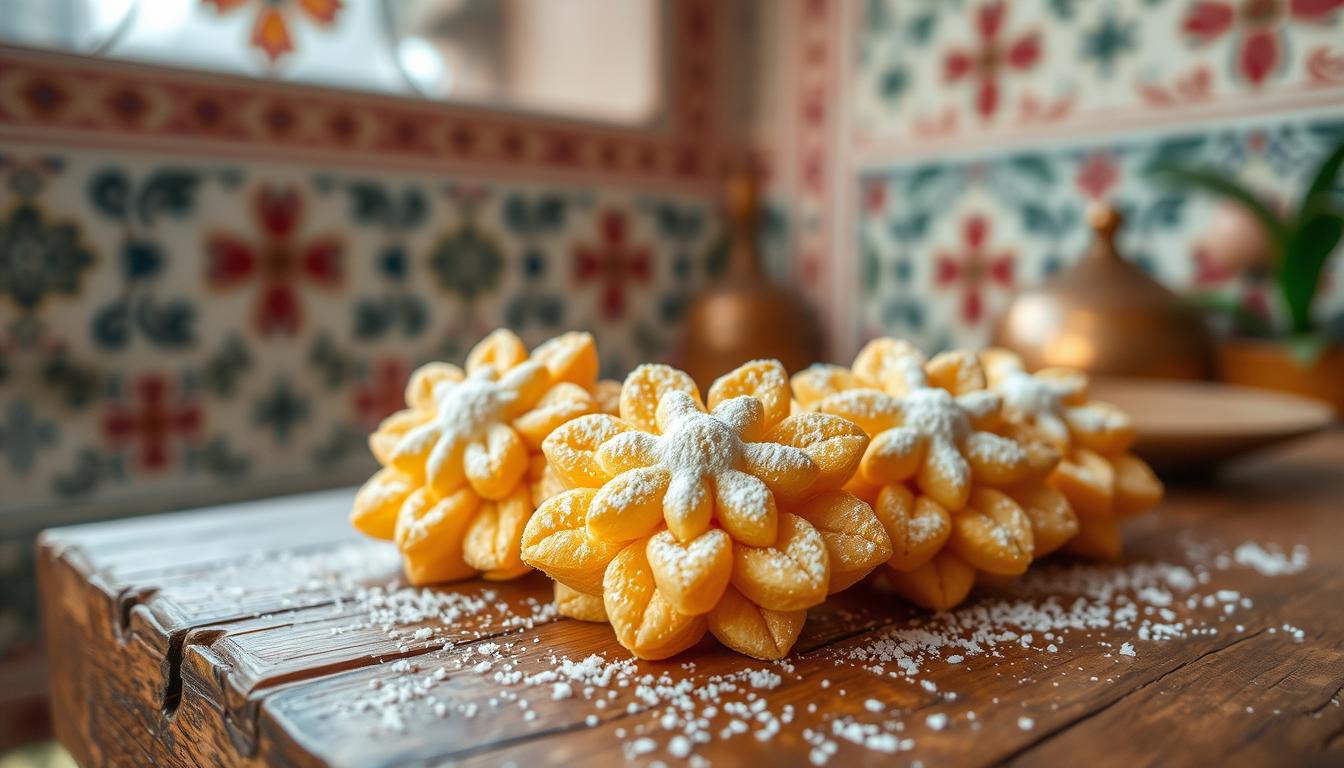
What draws people to Moroccan chebakia, a traditional North African pastry? Is it the crispy sesame seeds and sweet honey, or the rich history and cultural significance? As you explore Moroccan chebakia, you’ll find out about the special ingredients, traditional ways of making it, and its cultural importance.
Introduction to Moroccan Chebakia
Exploring Moroccan chebakia opens a door to Morocco’s diverse culinary world. Influenced by Berber, Arab, and Moorish cultures, you’ll learn how to make this traditional pastry. It’s a favorite during Ramadan, and you’ll learn how to make it perfectly.
Table of Contents
What is Moroccan Chebakia?
Moroccan cuisine is famous for its rich flavors and traditional sweets. Chebakia is a beloved treat, often enjoyed during Ramadan. It’s a sesame cookie that’s deep-fried and then soaked in sweet syrup.
Chebakia is a key part of Ramadan desserts in Moroccan culture. Making it is a labor of love that requires patience and skill. Its crispy outside and sweet inside make it a must-try for those interested in Moroccan sweets.
Origins and Cultural Significance
Chebakia has a rich history in Morocco, tied to the country’s culture and religion. It’s a symbol of hospitality and generosity, served at special occasions during Ramadan.
Common Ingredients
The ingredients for chebakia are simple yet essential. They include sesame seeds, honey, and spices, common in Moroccan cuisine. Together, they create a delicious and authentic Moroccan sweet.
Traditional Preparation Methods
Making chebakia involves deep-frying the cookies and soaking them in syrup. This process requires skill and patience. Yet, the result is a unique and delicious part of Moroccan cuisine.
Essential Ingredients for Chebakia
To make authentic chebakia, you need specific ingredients. These are key to its flavor and texture. The flour used, 4 cups of all-purpose, affects the taste and feel of chebakia.
Spices and sweeteners are also vital. Ground anise, cinnamon, and honey are must-haves. They add depth to the chebakia.
Sesame seeds are a key ingredient, with 1 cup of toasted seeds needed. They give a nutty flavor and a crunchy texture. This is what makes chebakia special.
Other important ingredients include baking powder, salt, and melted butter. The dough also gets flavor from olive oil, vinegar, and orange flower water. Active dry yeast helps the dough rise, making it light and airy.
Chebakia is a big part of Moroccan cuisine, more so during Ramadan. It combines fried dough, sesame seeds, and sweet honey syrup. This mix is a classic of Moroccan cooking.
To make chebakia, you mix the ingredients in a certain way. The dough is kneaded for 7 to 8 minutes by hand or 4 to 5 minutes in a stand mixer.
The ingredients used in chebakia show Morocco’s rich culinary traditions. The use of sesame seeds, honey, and spices is typical of Moroccan cuisine. These ingredients, along with the fried dough, make a unique and tasty treat for special times.
Tools and Equipment Needed
To make authentic Moroccan sweets, like chebakia, you need the right tools. Having the right gear is key for the perfect texture and flavor. It’s important to have a well-stocked kitchen for Ramadan desserts.
You’ll need a mixing bowl, a measuring cup, and a frying pan. The frying pan is very important. It must handle high temperatures and heat evenly. This is key for frying chebakia to get it just right.
You might also want a pastry brush, a pastry cutter, and a cooling rack. These help with shaping and decorating your chebakia. They also help cool it down after frying. With the right tools, you can make delicious Moroccan sweets for any occasion.
Some other essential gear includes:
- A deep frying thermometer to ensure the oil reaches the correct temperature
- A slotted spoon for removing the chebakia from the oil
- A paper towel-lined plate for draining excess oil
By getting these tools, you’re on your way to making tasty Moroccan sweets, like chebakia.
Step-by-Step Guide to Making Chebakia
To make authentic Moroccan chebakia, follow a step-by-step guide. This traditional cookie is a staple during Ramadan. It’s made by deep-frying dough coated in honey and rosewater syrup, making it sweet and crispy. You can find recipes online, including a version on Moroccan food blogs, which makes about 2 kg of cookies.
First, prepare the dough by mixing flour, spices, and other ingredients. This creates a smooth and pliable dough. Then, shape the dough into small rings or knots and coat them in sesame seeds for extra texture and flavor.
Next, fry the chebakia in hot oil, usually olive oil, until they’re golden brown and crispy. After frying, soak the chebakia in a sweet syrup made from honey and rosewater. This gives it a unique flavor and aroma. With these steps, you can make delicious Moroccan chebakia, also known as cookies, to enjoy during Ramadan or any other time.
Tips for Perfecting Your Chebakia
To make perfect chebakia, you need to understand its details. This traditional North African pastry is a key part of Moroccan cuisine. It requires careful attention and practice to get it just right.
When making chebakia, avoid common mistakes. Don’t overmix the dough or fry it at the wrong temperature. To get the right texture, knead the dough well and fry until it’s golden and crispy.
For better flavor and aroma, use high-quality ingredients. Choose pure honey and toasted sesame seeds. Add a bit of orange blossom water to the dough for extra taste.
- Using the right type of flour to achieve the perfect texture
- Not overloading the dough with too many ingredients, which can affect the flavor and texture
- Experimenting with different flavors and ingredients to create unique variations of chebakia
By following these tips and practicing, you’ll make delicious chebakia. It will show off the rich culinary traditions of Moroccan cuisine and the art of making traditional North African pastry.
Serving Suggestions
When serving chebakia, how you present it matters a lot. You want to make it look beautiful and tasty. Try placing your chebakia on a platter or tray. Add some fresh herbs or powdered sugar on top for extra flair.
This will make your chebakia look elegant and special. It’s perfect for Ramadan desserts.
Choosing the right drink to go with your chebakia is also important. Moroccan mint tea is a great choice. It pairs well with the sweet and crispy chebakia. You could also serve it with cold milk or fruit juice.
If you’re hosting adults, coffee or wine can be a nice addition. It adds a touch of sophistication to your Moroccan sweets.
- As a snack or dessert during Ramadan
- As a side dish to accompany traditional Moroccan meals, such as tagine or couscous
- As a sweet treat to enjoy with a cup of coffee or tea
It’s important to store leftovers properly. Use an airtight container like a glass jar or plastic bag. This keeps your chebakia fresh for days.
You can also freeze them for up to a month. This makes them a great option for enjoying later.
The Health Aspects of Chebakia
Chebakia is a sweet treat from Morocco that can be healthy if made right. It’s part of Moroccan cuisine and shows the country’s rich culinary traditions. Chebakia is loved during Ramadan and other special times.
To make chebakia healthier, try these tips:
- Use olive oil instead of vegetable oil for a better choice.
- Watch your portions to not eat too much sugar and calories.
- Eat a variety of foods like fruits, veggies, and whole grains.
By choosing the right ingredients and watching your portions, you can enjoy chebakia. It’s a way to appreciate Moroccan cuisine and traditional North African pastry while staying healthy.
Chebakia Variations
Exploring Moroccan sweets, you’ll find chebakia, a key Ramadan dessert. It’s known for its flower-like shape and crunchy outside. Often, it’s topped with sesame seeds for extra texture and taste. Chebakia is a favorite, shared with friends and family during Ramadan.
Regional chebakia variations use different spices and coatings, like almonds or sesame seeds. These add unique flavors. Modern chebakia might be gluten-free or have new fillings. This makes it more inclusive and adds to Ramadan’s dessert variety. Here are some variations you might find:
- Traditional chebakia with orange flower-honey syrup
- Chebakia topped with roasted sesame seeds for added crunch
- Gluten-free chebakia for those with dietary restrictions, enjoyed during Ramadan
These changes show chebakia’s versatility in Moroccan sweets and Ramadan desserts. Enjoying traditional or modern chebakia, topped with sesame seeds, is always a treat.
Chebakia during Ramadan
As the ninth month of the Islamic calendar, Ramadan is a significant period for Muslims. Moroccan cuisine plays a vital role in the celebrations. Chebakia, a sweet, honey-coated pastry, is a staple on Moroccan tables during the holy month.
During Ramadan, many Moroccans enjoy chebakia a few hours after iftar, with a cup of mint tea. The dough is made with flour, salt, melted butter, and spices. It’s left to rest for over 20 minutes before shaping into flower shapes.
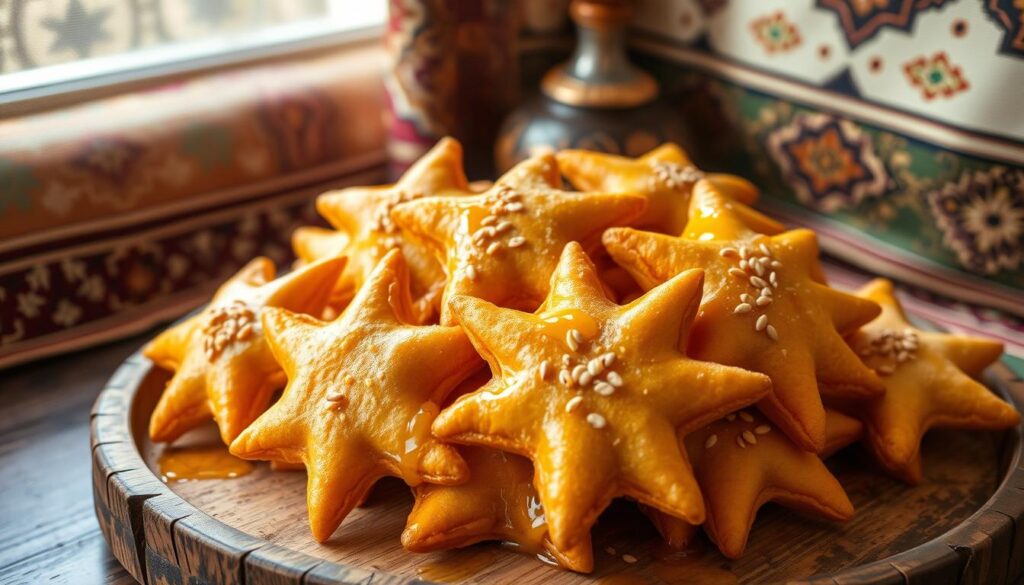
Chebakia is not just a tasty treat but also a key part of culinary traditions in Morocco. It’s served at weddings, baby showers, and sboue parties. During Ramadan, it symbolizes hospitality and generosity, shared with family and friends.
Some popular ways to enjoy chebakia during Ramadan include:
- Eating it with a cup of mint tea after iftar
- Sharing it with family and friends as a symbol of hospitality
- Pairing it with other traditional Moroccan dishes, such as harira soup and couscous
Exploring Moroccan Pastry Culture
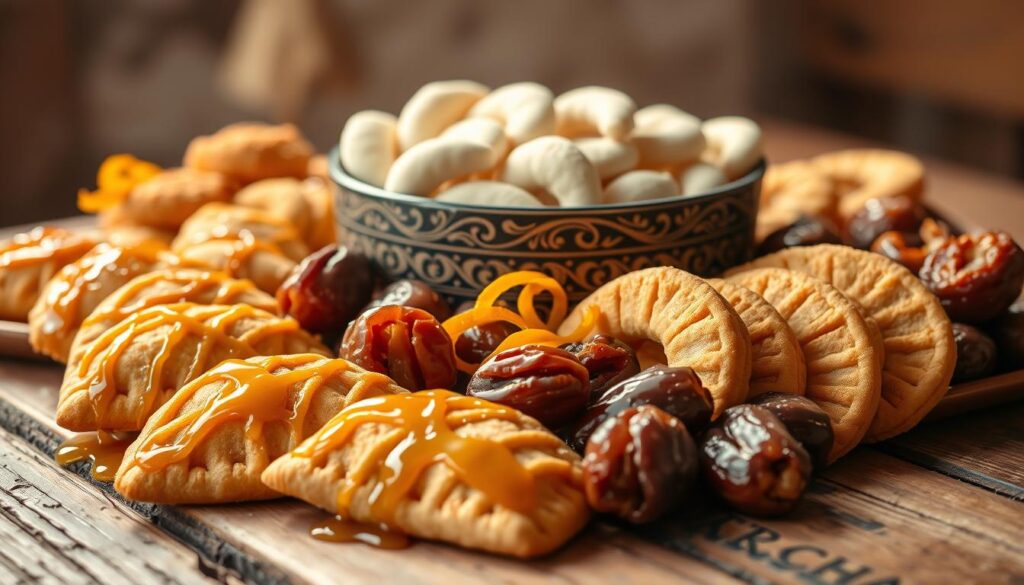
Moroccan pastry culture is rich and diverse. It includes Moroccan sweets, Ramadan desserts, and fried dough. You’ll find traditional pastries with unique flavors and meanings. From chebakia to briouats and kaab el ghazal, there’s something for everyone.
Some popular Moroccan sweets include:
- Briouats: favored as appetizers during Ramadan
- Kaab el ghazal: crescent-shaped pastries often enjoyed during special occasions
- M’hanncha: a “snake cake” made for special occasions
- Fekkas: designed to be paired with mint tea
These sweets use fresh almonds, honey, and spices. Their preparation is complex, requiring skill and experience. Trying these sweets is a great way to learn about Moroccan pastry culture.
In Moroccan pastry culture, you’ll find treats for any occasion. Their rich flavors and detailed preparations make them a highlight in the Arab world and Africa. Explore this world and discover the delicious flavors of Moroccan pastry culture.
FAQs About Moroccan Chebakia
Exploring Moroccan chebakia might raise some questions. This traditional honey cookie is a favorite in Morocco. It’s often enjoyed during Ramadan and is flavored with sesame seeds. Here are some answers to help you make these tasty treats.
Using top-notch ingredients is key when making Moroccan chebakia. Pure honey and sesame seeds are a must. You can also try different spice blends, like ras el hanout, for unique flavors. Don’t worry if you’re new; with practice, you’ll get the hang of it.
- What is the traditional way to serve chebakia?
- Can I use different types of honey to make chebakia?
- How do I store leftover chebakia to keep them fresh?
These answers and tips will help you become a chebakia pro. Whether you’re just starting or have experience, making Moroccan chebakia is fun. It’s a rewarding experience that will make your taste buds happy.
Your Guide to Making Delicious Moroccan Tagine
Conclusion: Enjoying Your Homemade Chebakia
As you finish your journey into traditional North African pastry, enjoy the sweet taste of your homemade Moroccan chebakia. This treat is more than a dessert; it’s a cherished part of Moroccan culinary traditions.
Whether you mastered the folding or tried new flavors, making chebakia is rewarding. Share your skills with family and friends, keeping the tradition alive. Your homemade chebakia will be a hit at gatherings, creating memories and sparking conversations.
Keep exploring Moroccan pastry culture and remember, the joy of chebakia is in the journey, not just the end result. Invite loved ones to cook with you, sharing the rich heritage of Moroccan cuisine.